
Thermocouples are the primary sensors in a technical roast, translating microvolt signals into valid thermal data for real-time tracking of the Rate of Rise, ensuring every dynamic chemical transformation is a predictable and engineering event.
High Precision Thermocouples and the Science of Data Logging
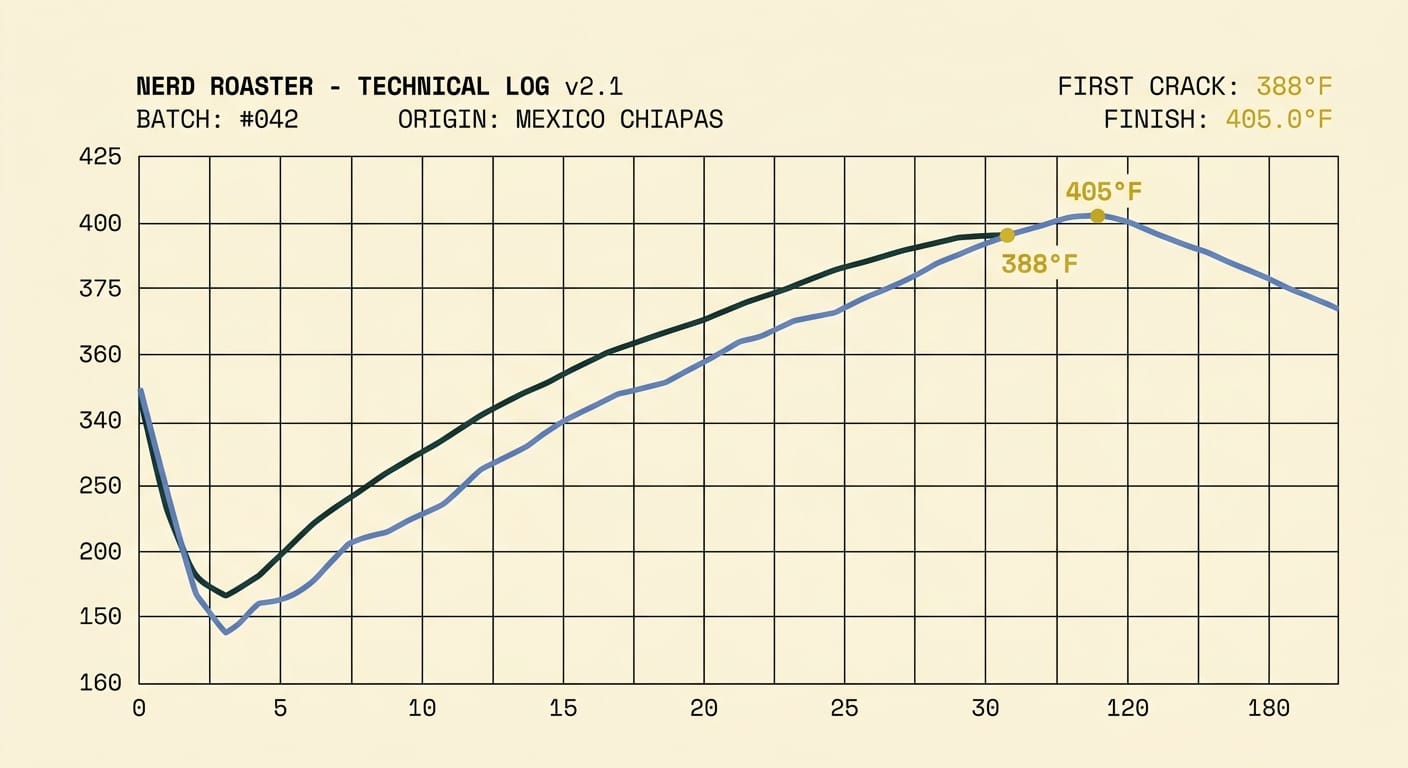
Every technical roast relies on the precise measurement of temperature over time. Thermocouples provide the primary data stream for calculating the Rate of Rise, which is the velocity of the roast. This data is the foundation of quality control, allowing the technical operator to understand how the bean mass is absorbing energy at every second of the process. A robust data logging system is essential for translating these microvolt signals into actionable thermal information.
Sensor Types and Placement for Valid Data
The most common sensors are Type J and Type K thermocouples. Type K, an alloy of chromel and alumel, is often preferred for its broad temperature range and long-term stability. The sensor is constructed by welding two dissimilar metals, creating a junction that generates a tiny voltage proportional to the temperature. Valid data depends entirely on proper sensor placement. Probes must be submerged in the tumbling bean mass without contacting the drum metal to measure the internal bean temperature. A secondary probe, the Environmental Temperature (ET) sensor, monitors the airflow, providing a map of the machine's thermal inertia. A common error in technical logging is assuming that an inappropriately placed probe provides accurate information, which can lead to catastrophic misinterpretations of the roast's progression.
The Relationship Between Data Points and Chemistry
The correlation between thermocouple data and bean chemistry is direct. As the bean temperature moves through specific set points, the operator anticipates critical chemical reactions. At 300°F, the data signals the start of the Maillard browning, indicating that the endothermic drying phase is complete. Just prior to first crack, a predictive technical operator will throttle the energy input based on the trend line of the Rate of Rise, preventing the exothermic burst from creating an uncontrolled finish. Thermocouple precision is the variable that separates a standard roast from a data driven profile designed to maximize the clarity of a microlot.