
Coffee processing is an engineering problem. We break down the exact chemical pathways of Washed vs. Natural methods and how they dictate the structural balance of your morning cup.
Processing Mechanics: The Technical Contrast of Washed vs. Natural Methods
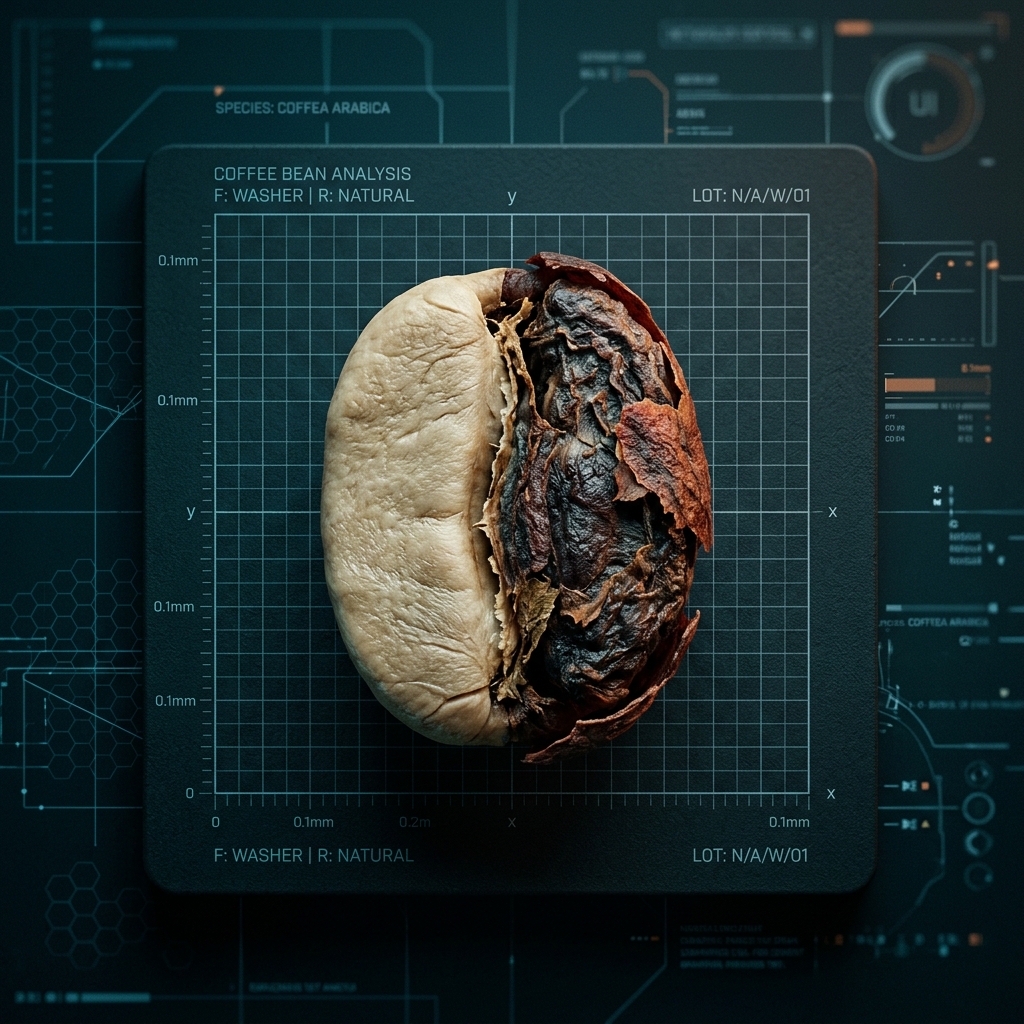
Coffee processing is fundamentally an engineering problem. Once a cherry is harvested, the objective is to strip the organic fruit material from the seed without compromising the seed's internal cellular structure. The two primary methods for achieving this - the Washed process and the Natural process - solve the problem through entirely different chemical pathways.
The Washed Process (Precision and Clarity) The Washed method is an exercise in strict environmental control. Cherries are passed through a mechanical depulper to strip the outer skin. The seeds, still coated in a sticky mucilage, are then submerged in water tanks. Over the next 12 to 24 hours, natural enzymes break down the remaining sugars. This requires constant monitoring of the tank's pH and ambient temperature. Once the mucilage is dissolved, the beans are washed clean and dried. Because the fruit is removed immediately, the final cup exhibits high clarity, a strict acidic structure, and zero interference from external sugars. It is the purest expression of the bean's genetic baseline.
The Natural Process (Enzymatic Breakdown) The Natural method takes the opposite approach, leaning heavily on dehydration and prolonged enzymatic breakdown. The cherry is left entirely intact and laid out to dry on raised beds under the sun for up to 30 days. As the fruit dehydrates, sugars and organic compounds transfer directly into the seed. This osmotic exchange yields a heavy body and complex fruit notes in the final cup. However, the process is highly volatile. It requires intense moisture monitoring and continuous turning of the cherries to prevent fungal defects and over-fermentation.
Understanding these mechanics allows a roaster to anticipate how a bean will behave in the drum. A dense Washed bean handles a high initial charge temperature well, while a sugar-heavy Natural bean requires a gentler thermal approach to avoid scorching.