
In 1708, a geographical accident on a tiny island created the Bourbon coffee variety. It is the genetic parent of modern hybrids like Caturra, but it demands more from a roaster than almost any other bean.
The Bourbon Heritage: A Study in Genetic Lineage and Thermal Discipline
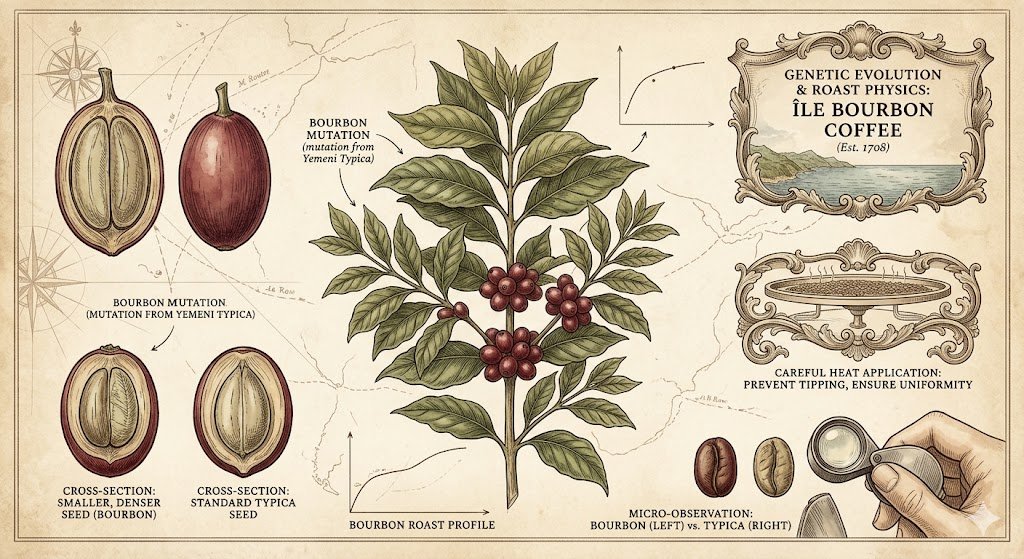
In 1708, French settlers introduced coffee cultivation to Île Bourbon, now known as Réunion. This geographical isolation triggered a natural mutation of the original Yemeni Typica. While Bourbon produces approximately 25% more fruit than its ancestor, it remains notably susceptible to coffee leaf rust. This vulnerability is the primary trade-off for its superior cup quality. It now serves as the genetic foundation for many contemporary hybrids, including Caturra.
From a roasting perspective, Bourbon presents specific challenges that require technical authority. The beans are generally smaller and significantly more dense than Typica. This high density demands a sophisticated approach to heat application. Proper thermal management is critical during the initial drying phase to ensure the core reaches target temperatures without tipping or charring the exterior.
When these variables are managed with precision, the variety yields exceptional sweetness and a heavy, creamy body. This profile is a direct result of the high concentration of complex sugars developed during the slow maturation process at high altitudes. Effectively roasting Bourbon is a exercise in preserving historical genetics through modern roasting science. It requires a deep understanding of bean density and the specific physics of heat transfer to unlock the structural balance that has made this variety a staple in the specialty coffee market for centuries.