
Arabica and Robusta aren't just different flavors; they are different machines. With double the chromosomes and 60% more lipids, Arabica is built for complexity. Robusta is a survivor, loaded with caffeine and CGA for chemical defense.
A Technical Taxonomy of Species: Arabica vs Robusta
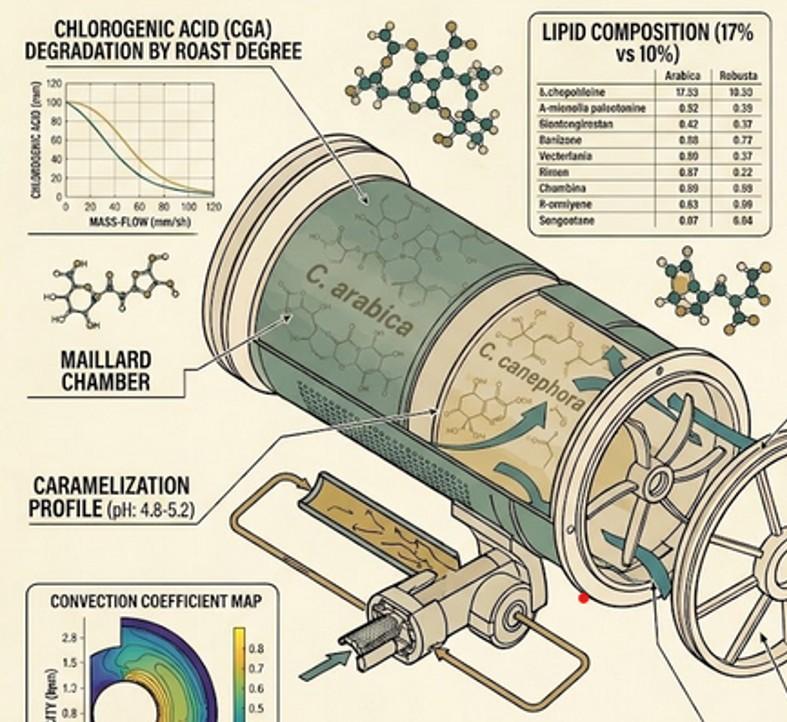
In the specialty sector, we often treat Arabica as the default, but a sophisticated understanding of roasting requires a deep dive into the divergent physical and chemical properties of C. arabica (Arabica beans) and C. canephora (Robusta beans).
The Lipid-Sugar Nexus
The sensory superiority of Arabica is not subjective. It's a byproduct of its lipid and sugar content. Lipids are the carriers of flavor, and during the roasting process, they help to trap the volatile organic compounds that create the "bouquet" of a high-end coffee. Because Arabica has nearly 60% more lipids than Robusta, the resulting cup has a much higher clarity and a more refined mouthfeel. Furthermore, the higher sucrose content in Arabica fuels the Maillard reaction and caramelization more effectively, producing the complex acids (such as citric and malic) that we prioritize in our technical roast profiles.
Resistance through Alkaloids
Conversely, Robusta is a masterpiece of agricultural resilience. The species is evolved to thrive at lower altitudes (0 to 800 MASL) where pest pressure is highest. Its high caffeine content is a natural insecticide. For the roaster, this high alkaloid concentration presents a challenge: caffeine is heat-stable and does not break down significantly during the roast. This means the bitterness is a fixed variable. To manage this, technical roasters of "Specialty Robusta" (a growing market segment) focus on extended development times to mitigate the harshness of the chlorogenic acids while attempting to preserve the heavy body that the species is known for.
Managing Thermal Inertia
The physical morphology of the beans also dictates our engineering approach. Arabica beans typically have a more open "fissure" or center cut, which aids in steam release. Robusta beans are more circular and physically robust. During the endothermic phase, Robusta can exhibit higher thermal inertia, meaning it resists temperature changes initially but can then "run away" during the first crack. By analyzing the density and moisture levels of each species prior to the charge, we can adjust our burner settings to maintain a linear Rate of Rise, ensuring that the quality is maintained regardless of the cultivar.
Taste the Microlot
Reading about great coffee is one thing. Brewing it is another. Subscribe and get freshly roasted microlots delivered to your door every month.
Freshly roasted
Delivered monthly
Related Reading
Coffee Leaf Rust: Cellular Pathology of Hemileia vastatrix
Understanding specialty resilience requires looking at cellular pathology. Hemileia vastatrix (Rust) bypasses host defenses via specialized substomatal anchors and haustoria, siphoning off the carbohydrates needed for bean density and sucrose development.
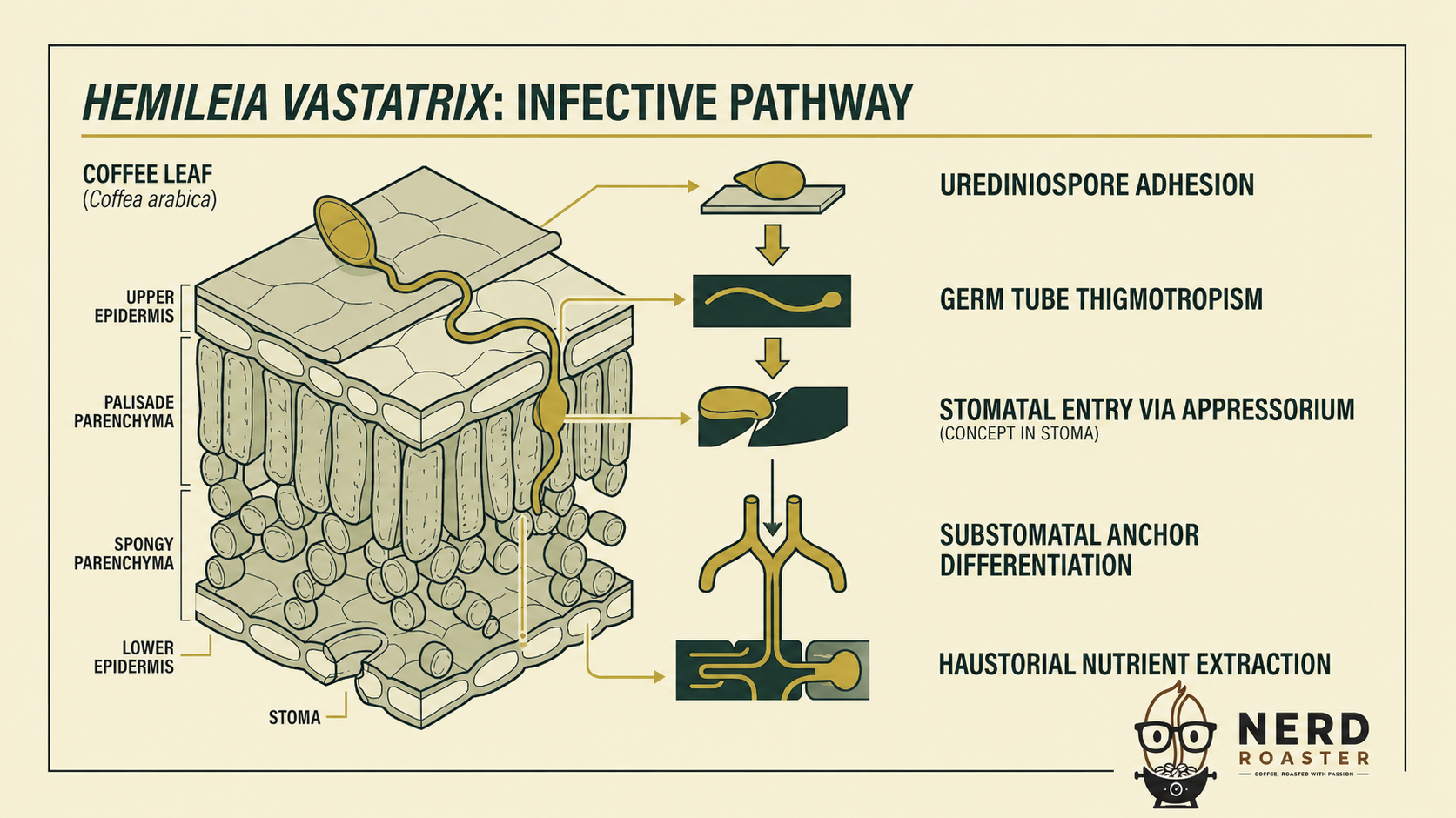
To evaluate specialty coffee resilience with professional agronomic rigor, a roaster must analyze the biotrophic mechanisms of Hemileia vastatrix , the obligate plant pathogen responsible for coffee ...
Coffee Price Arbitrage, Yield Projections, and the Retail-Commodity Spread
The C-market correction is a structural supply shift. With forward projections placing the 2026/27 Brazil harvest at a potential record 75.9M bags, financial indices are pricing in a 10M bag global surplus, even as retail lag remains high.
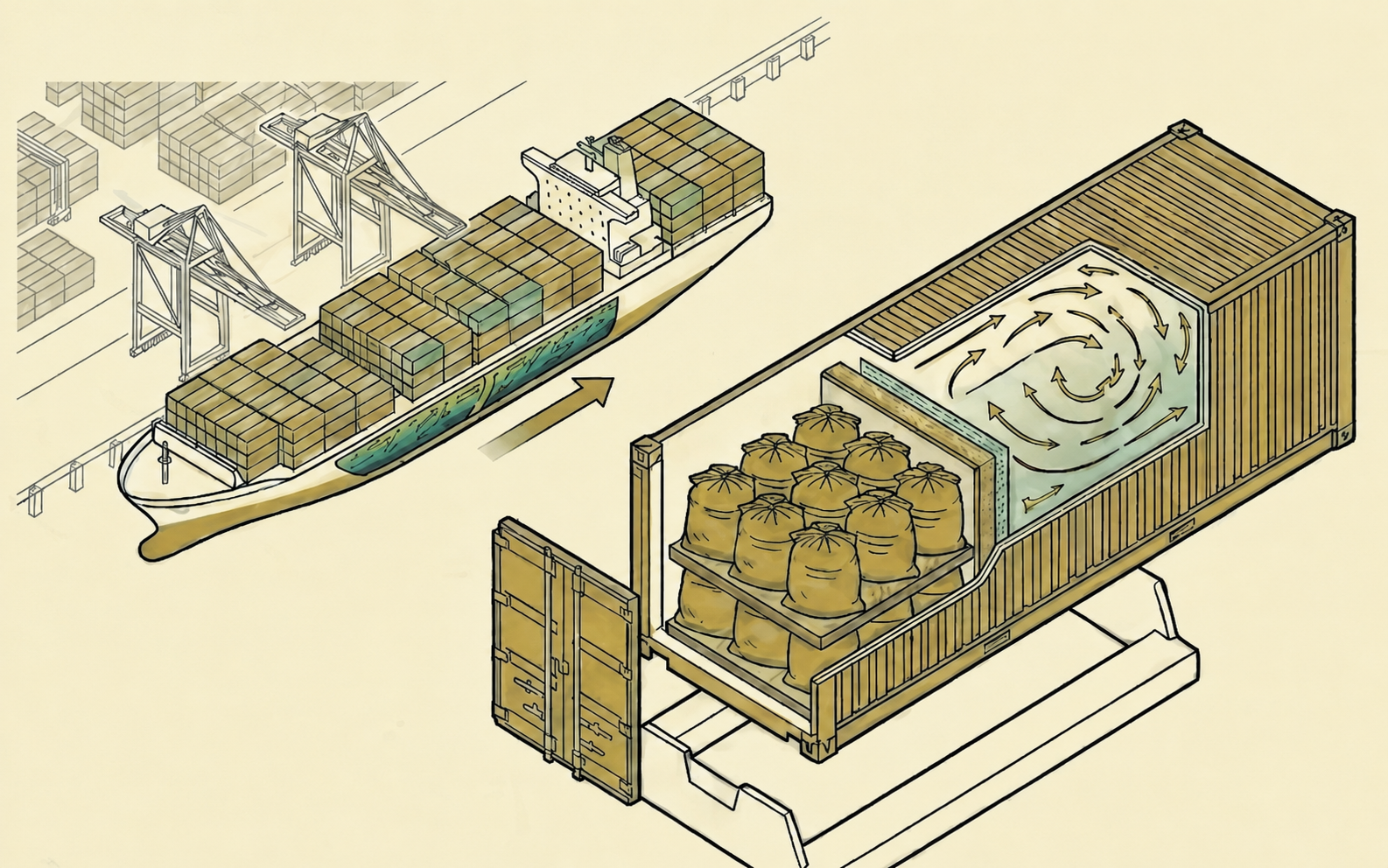
In the specialty domain, evaluating macro pricing data requires analytical objectivity. To view coffee valuation through a sophisticated lens, akin to how an allocation strategist or a fine wine cella...
Fluid Dynamics of the Roasting Drum
Look past the bean temperature curve. Optimizing drum fluid dynamics means manipulating the Nusselt number to disrupt the stagnant boundary layer, ensuring uniform core development
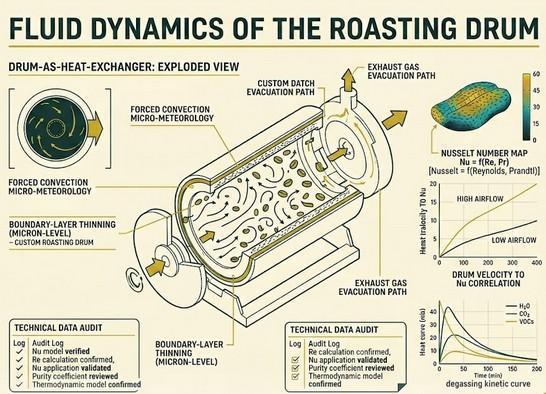
A deep technical understanding of coffee roasting requires looking past simple temperature curves and analyzing the fluid dynamics within the drum environment. The drum functions essentially as a spec...