
Cupping isn't just about technical parameters; it's where roasting physics meets sensory reality. By stabilizing the brew environment, we can clearly isolate roast uniformity, tactile mouthfeel, & genuine flavor notes. Here is how we calibrate our palates.
Cupping: Quality Control for the Roast
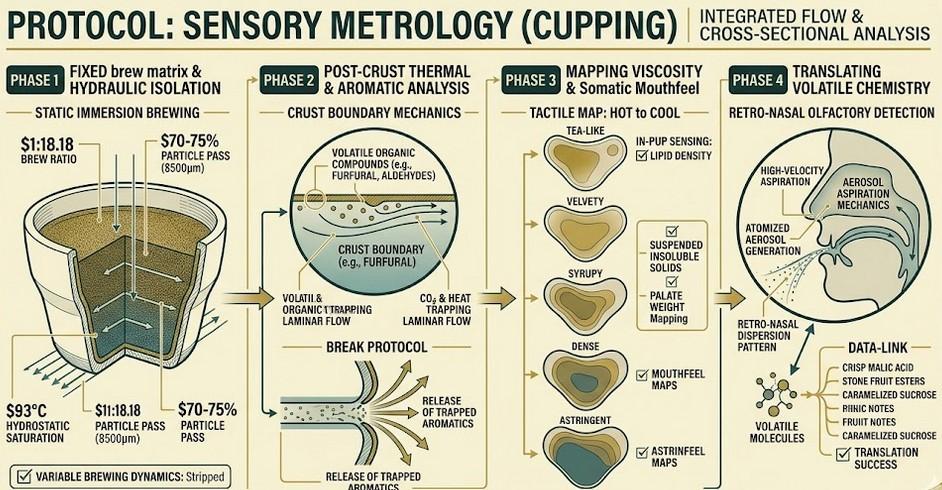
Cupping functions as the definitive diagnostic protocol within the roasting workflow. By stabilizing all extraction parameters within a fixed immersion matrix, the protocol strips away external operational variables to objectively audit the intrinsic result of precise thermal application. The process utilizes three integrated analytical phases: verifying roast development uniformity, mapping tactile viscosity and somatic mouthfeel, and translating vaporized organic chemistry into concrete, identifiable taste descriptors. This integrated sensory audit converts subjective perception into objective, actionable data for technical calibration.
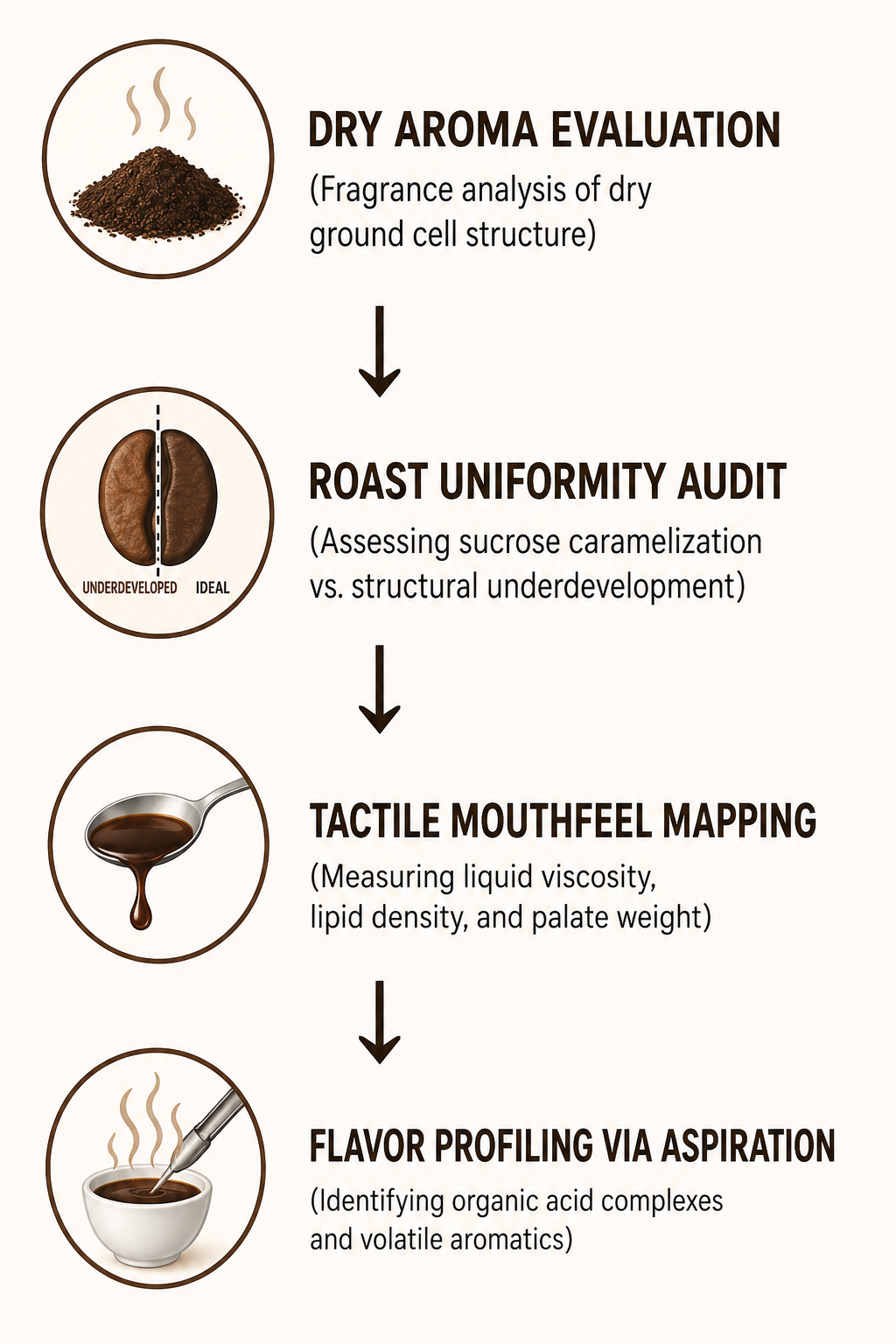
Auditing Roast Development
The primary operational purpose of a cupping panel is to verify the accuracy of a roast profile. During the roasting process, thermal energy drives structural and chemical changes within the bean matrix. Cupping isolates these results.
If the roaster applied insufficient energy during the drying or yellowing phases, the coffee exhibits signs of underdevelopment. This manifests on the cupping table as a sharp, astringent, green-apple malic acidity or a distinct grain-like, grassy note. Conversely, if the roast progressed too far into an uncontrolled exothermic phase, the high thermal energy degrades delicate organic compounds, replacing origin-specific traits with heavy, smoky, or ash-like carbon defects.
Mapping Viscosity and Mouthfeel
Mouthfeel is the tactile sensation caused by the physical properties of the liquid hitting the oral cavity. It is determined by the concentration of lipids, complex proteins, and insoluble micro-particles suspended in the brew. Because cupping uses no paper filtration, these heavy elements remain fully present in the bowl.
Evaluators systematically track mouthfeel as the beverage cools from hot to warm. This cooling phase reduces the masking effect of high thermal energy, allowing the palate to accurately gauge the liquid’s viscosity. A perfectly developed roast presents a clean, syrupy, or velvety weight, indicating that the cellulose structures inside the bean broken down correctly to release soluble oils without generating chalky or gritty sediment.
Translating Sensory Tasting Notes
The diverse tasting notes identified during a cupping session—ranging from bright citrus to rich cocoa—are the direct sensory translations of complex organic chemistry. When an evaluator forcefully draws the liquid from the spoon, they vaporize these chemical groups into an aerosol.
Enclosed volatile compounds, such as enzymatic aldehydes and fruit-forward esters, interact with the retro-nasal olfactory receptors. At the same time, non-volatile compounds like citric, malic, and phosphoric acids react with taste buds on the tongue. The combination of these two inputs allows a trained cupper to map the underlying chemical fingerprint of the lot, turning raw data into concrete, standard descriptors.
Taste the Microlot
Reading about great coffee is one thing. Brewing it is another. Subscribe and get freshly roasted microlots delivered to your door every month.
Freshly roasted
Delivered monthly
Related Reading
Coffee Leaf Rust: Cellular Pathology of Hemileia vastatrix
Understanding specialty resilience requires looking at cellular pathology. Hemileia vastatrix (Rust) bypasses host defenses via specialized substomatal anchors and haustoria, siphoning off the carbohydrates needed for bean density and sucrose development.
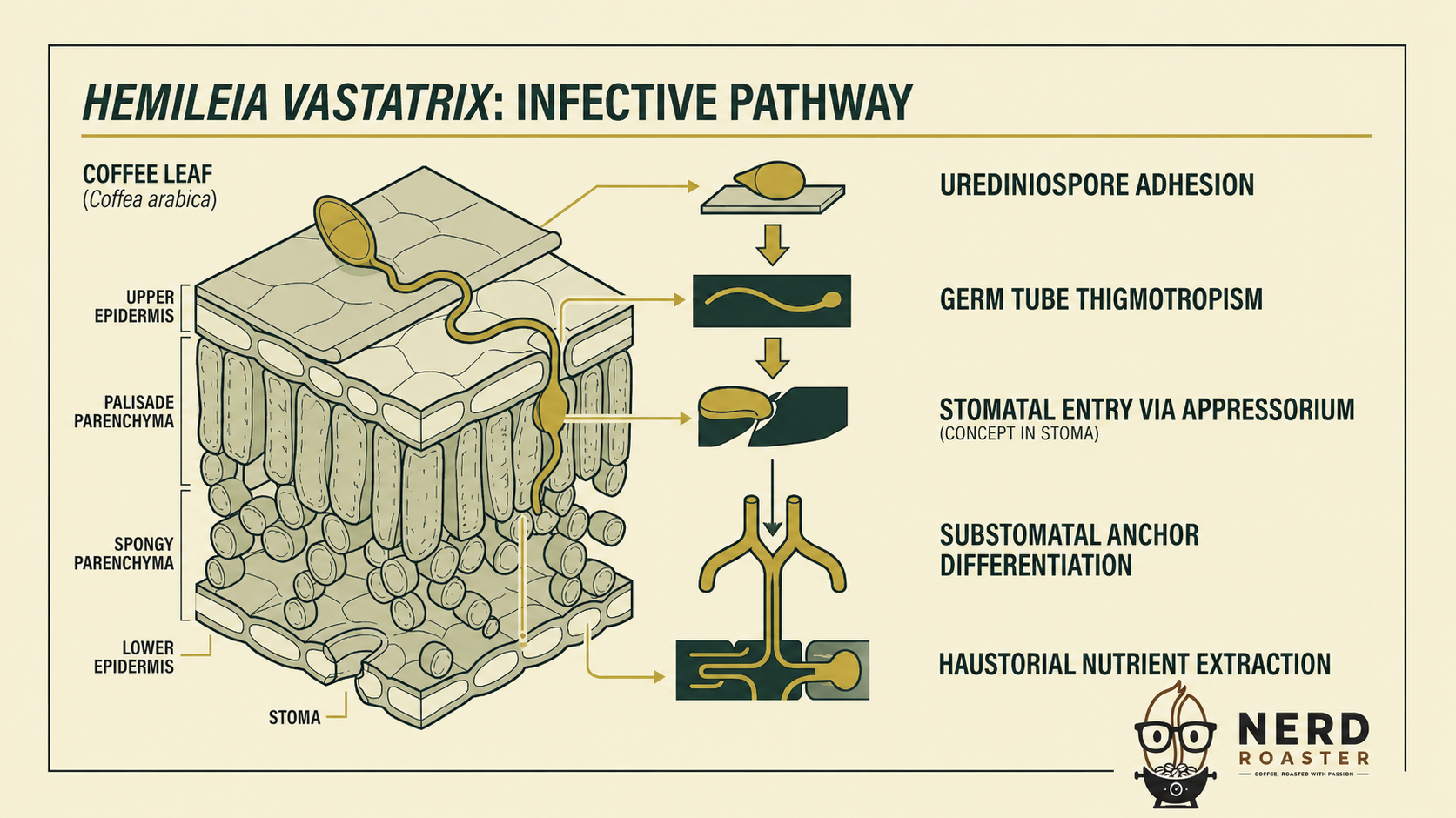
To evaluate specialty coffee resilience with professional agronomic rigor, a roaster must analyze the biotrophic mechanisms of Hemileia vastatrix , the obligate plant pathogen responsible for coffee ...
Coffee Price Arbitrage, Yield Projections, and the Retail-Commodity Spread
The C-market correction is a structural supply shift. With forward projections placing the 2026/27 Brazil harvest at a potential record 75.9M bags, financial indices are pricing in a 10M bag global surplus, even as retail lag remains high.
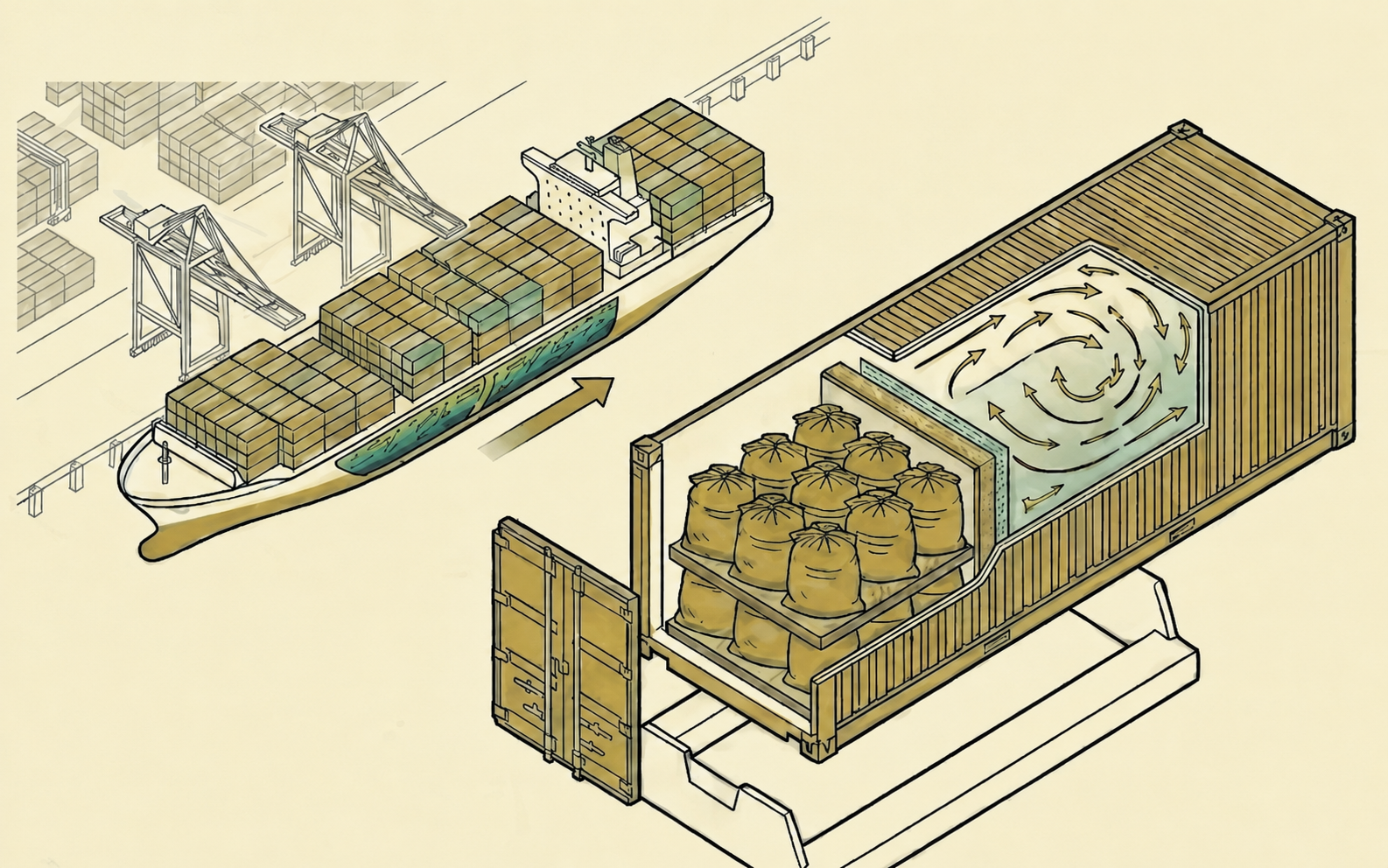
In the specialty domain, evaluating macro pricing data requires analytical objectivity. To view coffee valuation through a sophisticated lens, akin to how an allocation strategist or a fine wine cella...
Fluid Dynamics of the Roasting Drum
Look past the bean temperature curve. Optimizing drum fluid dynamics means manipulating the Nusselt number to disrupt the stagnant boundary layer, ensuring uniform core development
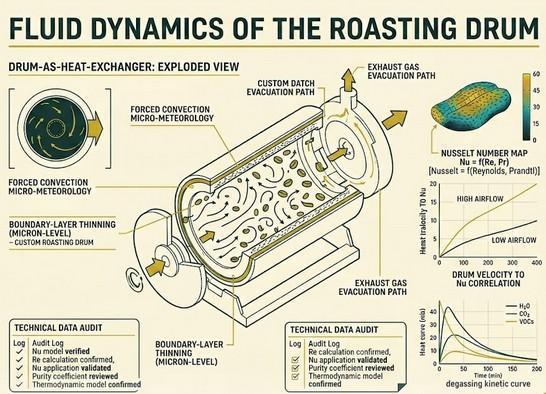
A deep technical understanding of coffee roasting requires looking past simple temperature curves and analyzing the fluid dynamics within the drum environment. The drum functions essentially as a spec...