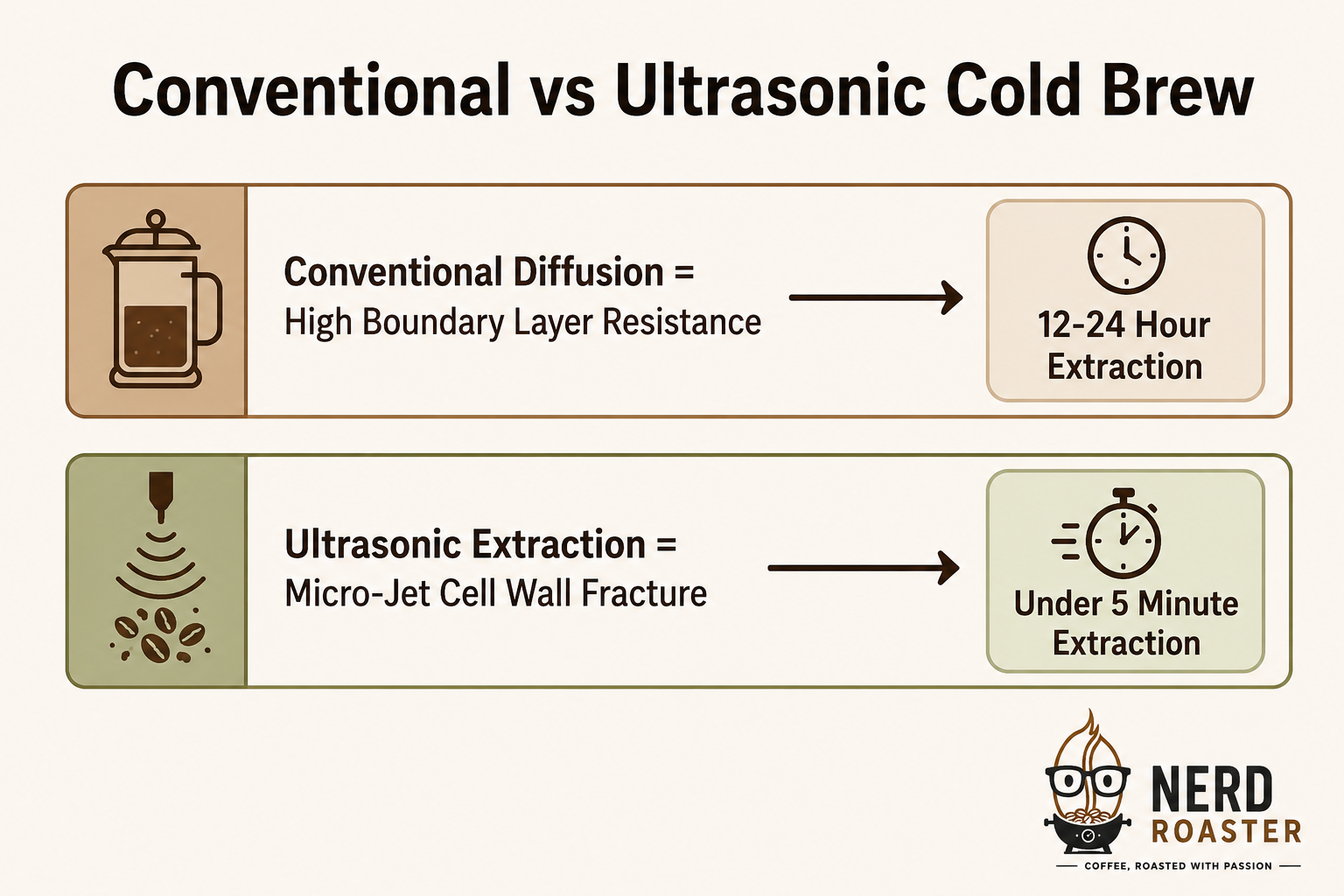
If you've ever made cold brew at home, you know the biggest operational challenge is time. Standard cold brewing requires a 12 to 24 hour steep simply because cold water is a passive solvent. Without the thermal energy of hot water to force flavor out of the coffee, we are left waiting on slow, natural diffusion to cross the bean's cellular boundary layer.
But what if we could replace thermal energy with mechanical kinetic energy? By introducing high frequency acoustic waves into a cold brewing slurry, we unlock a process known as ultrasonic mass transfer. This technique completely bypasses the traditional overnight timeline, safely extracting delicate origin flavors in under five minutes.
Acoustic Field Dynamics and Bubble Formation
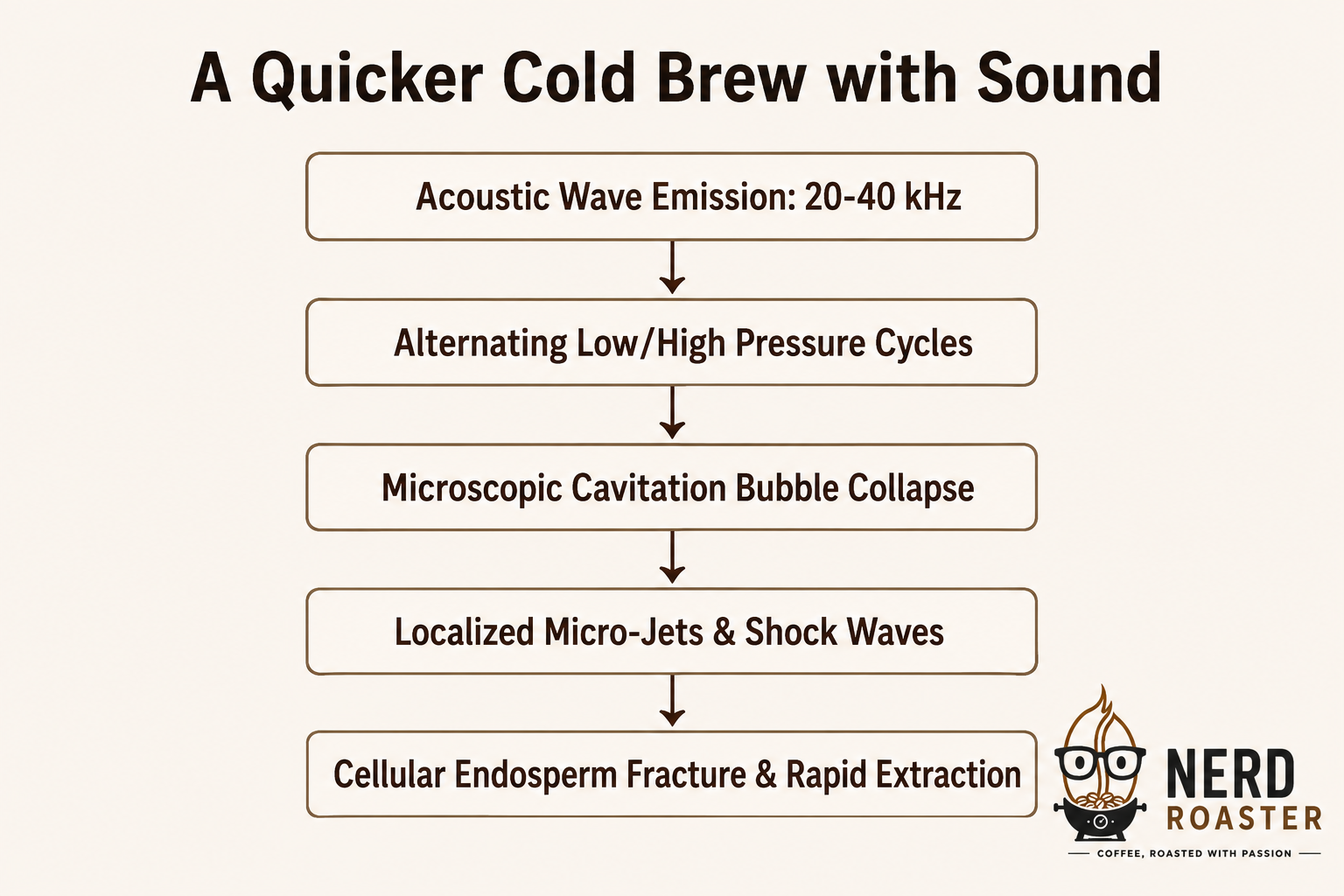
To understand how sound replaces heat, we have to look at how sound waves travel through water. Ultrasonic brewing systems use an electrical transducer to send intense mechanical vibrations through the liquid, calibrated between 20 and 40 kHz (well above human hearing). As these waves move through the water and coffee slurry, they create rapid, alternating cycles of high and low pressure.
Think of the low pressure cycle as a physical pulling force. This force stretches the water molecules until they tear apart at a microscopic level, creating tiny vacuum pockets known as cavitation bubbles. These bubbles form naturally along the irregular, porous edges of the coffee grounds. As successive sound waves pass by, the bubbles absorb energy and expand like tiny balloons until they reach an unstable volume determined by the system's frequency.
The Physics of Transient Cavitation Collapse
The magic happens when these microscopic bubbles cannot hold any more energy. The immense pressure of the surrounding liquid forces the bubble to implode violently within a single nanosecond. This is not a destructive explosion that ruins the batch; rather, it focuses an incredible amount of kinetic energy onto a microscopic target.
When a bubble implodes right next to a solid piece of coffee ground, it collapses asymmetrically. This uneven collapse forces a high velocity micro-jet of liquid to shoot straight toward the bean surface at speeds exceeding 100 meters per second.
Alongside these micro-jets are tiny, localized shock waves that create temporary spikes in pressure and temperature at the exact point of impact. While these extreme conditions are strictly microscopic and do not change the cold temperature of the overall brew, they provide more than enough mechanical power to strip away the stagnant water boundary layers that normally slow down cold extraction.
Intracellular Desorption Mechanics
The primary bottleneck in standard cold brewing is getting water past the stubborn cellulose walls of the coffee seed. Ultrasonic micro-jets solve this by drilling micro-fractures into the bean endosperm, instantly exposing a massive amount of hidden surface area to the water.
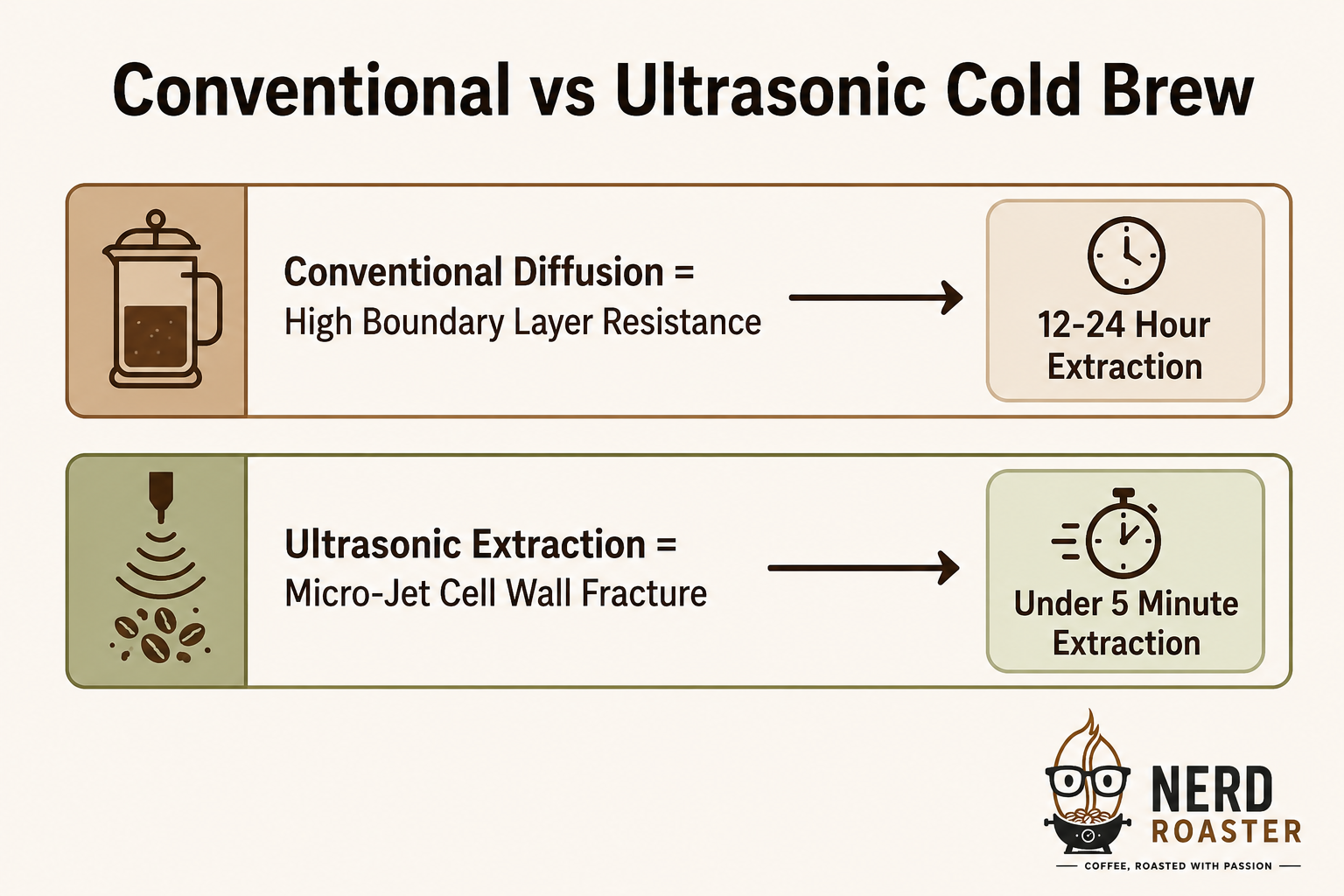
y changing how the water interacts with the cell structure, we can precisely control the extraction kinetics of specific flavor groups:
Lipids and Soluble Oils: The mechanical shear forces gently emulsify tightly bound surface oils, letting them blend smoothly into the final beverage to create a heavier, more velvety mouthfeel.
Low Molecular Weight Compounds: Highly soluble fruit esters and organic acids dissolve into the water almost instantly, preserving the vibrant, bright origin notes that traditional long steeps often mute.
High Molecular Weight Polysaccharides: Because the water stays cold, long-chain bitter compounds and dry, woody tannins stay locked safely inside the core matrix. This avoids the heavy, overextracted flavor profile common in poorly managed hot brews.
By utilizing acoustic cavitation, we can achieve a perfect 1.35% Total Dissolved Solids (TDS) extraction equilibrium in less than five minutes, proving that with a little fluid dynamics, mechanical energy can successfully replace heat on the production floor.