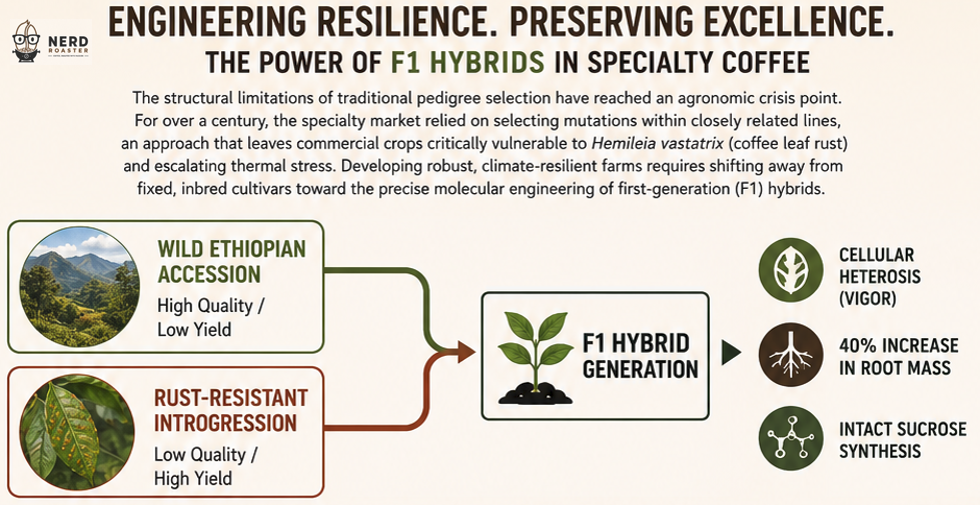
The structural limitations of traditional pedigree selection have reached an agronomic crisis point. For over a century, the specialty market relied on selecting mutations within closely related lines, an approach that leaves commercial crops critically vulnerable to Hemileia vastatrix (coffee leaf rust) and escalating thermal stress. Developing robust, climate-resilient farms requires shifting away from fixed, inbred cultivars toward the precise molecular engineering of first-generation (F1) hybrids.
The Biomolecular Mechanics of Hybrid Vigor
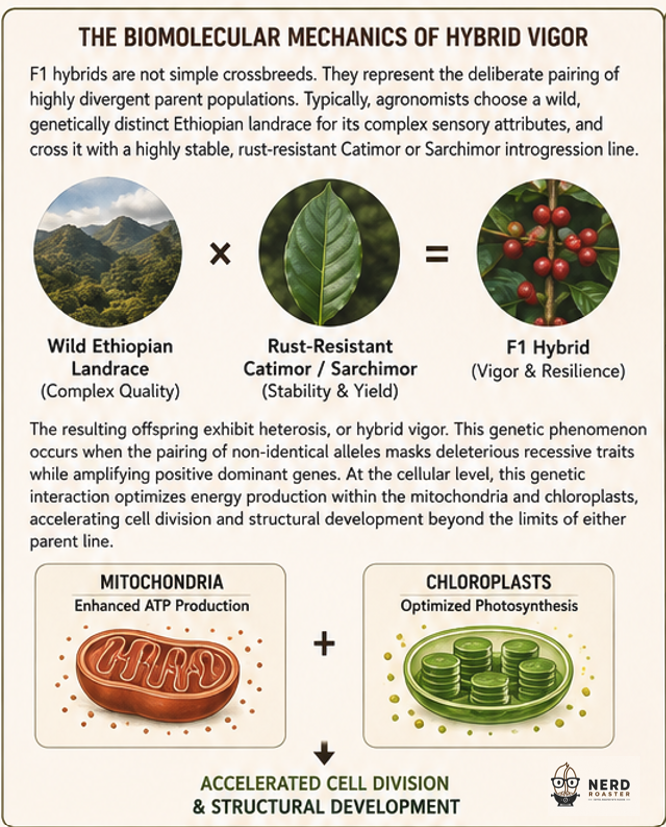
F1 hybrids are not simple crossbreeds. They represent the deliberate pairing of highly divergent parent populations. Typically, agronomists choose a wild, genetically distinct Ethiopian landrace for its complex sensory attributes, and cross it with a highly stable, rust-resistant Catimor or Sarchimor introgression line.The resulting offspring exhibit heterosis, or hybrid vigor. This genetic phenomenon occurs when the pairing of non-identical alleles masks deleterious recessive traits while amplifying positive dominant genes. At the cellular level, this genetic interaction optimizes energy production within the mitochondria and chloroplasts, accelerating cell division and structural development beyond the limits of either parent line.
Structural Advantages and Nutrient Kinetic Upgrades
The immediate physical expression of heterosis fundamentally upgrades how the tree interacts with its environment, directly improving its survival and productivity:
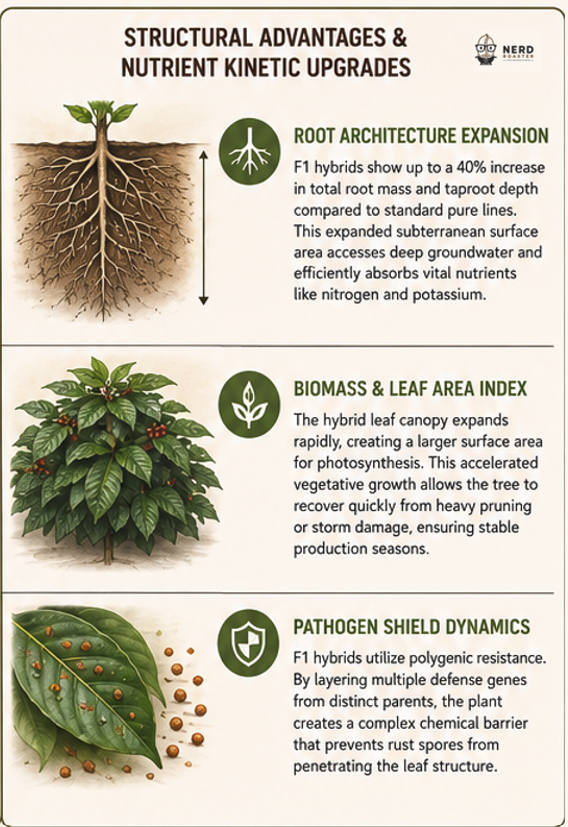
Root Architecture Expansion: F1 hybrids show up to a 40% increase in total root mass and taproot depth compared to standard pure lines. This expanded subterranean surface area allows the tree to draw up deep groundwater during droughts and efficiently pull in vital soil nutrients like nitrogen and potassium.
Biomass and Leaf Area Index: The hybrid leaf canopy expands rapidly, creating a larger surface area for photosynthesis. This accelerated vegetative growth lets the tree recover quickly from heavy pruning or storm damage, ensuring stable production seasons.
Pathogen Shield Dynamics: Unlike standard lines where rust resistance often breaks down after a few generations, F1 hybrids utilize polygenic resistance. By layering multiple defense genes from distinct parents, the plant creates a complex chemical barrier that prevents rust spores from penetrating the leaf structure.
Preserving Volatile Chemistry on the Cupping Table
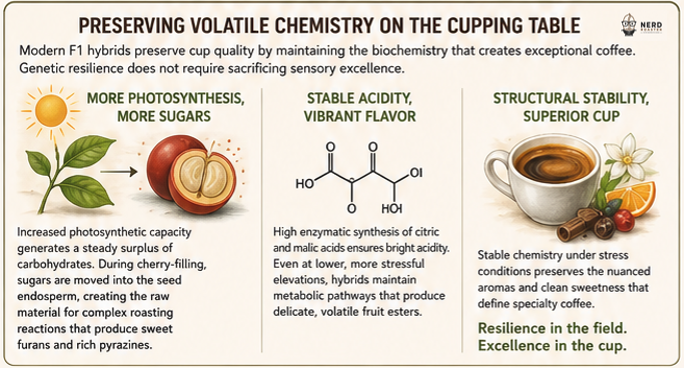
Historically, critics argued that introducing rust-resistant genetics ruined the sensory quality of the cup, often bringing along the harsh, rubbery notes of Coffea canephora (robusta) ancestors. Modern F1 hybrids solve this challenge by using targeted genetic selection to isolate and preserve key flavor pathways.The increased photosynthetic capacity of a hybrid canopy generates a steady surplus of carbohydrates. During the critical cherry-filling stage, the plant moves these sugars directly into the developing seed endosperm. This high concentration of stored sucrose acts as the raw material for complex roasting reactions, generating sweet furans and rich pyrazines on the roasting line.Simultaneously, the hybrid plant maintains high enzymatic synthesis of citric and malic acids. Even when grown at lower, more stressful elevations, the stable metabolic pathways of the hybrid ensure it continues to synthesize the delicate, volatile fruit esters that define specialty coffee. This structural stability proves that genetic resilience does not require sacrificing cup quality.